

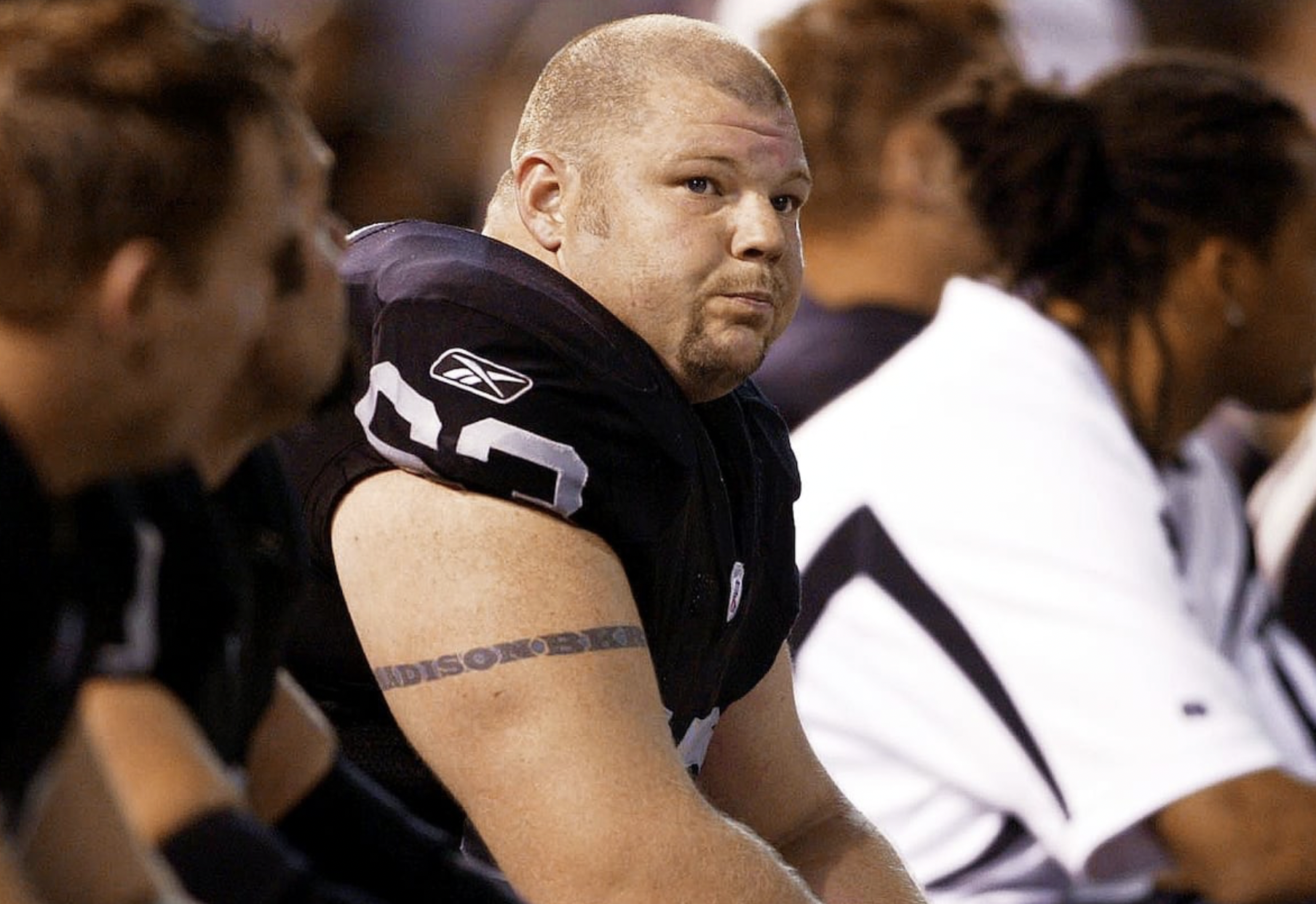
Former Oakland Raiders center Barret Robbins — the one-time NFL standout whose life spiraled into one of football’s most infamous cautionary tales — has died at 52.
Robbins, a former Pro Bowler who spent his entire nine-year NFL career with the Raiders, passed away peacefully in his sleep, according to his ex-wife, Marisa Robbins. The shocking news was first shared by former teammate Tim Brown before the Raiders later confirmed his death.
“The Raiders family is deeply saddened to learn of the passing of Barret Robbins,” the team said in a statement. “The thoughts and condolences of the entire Raider Nation are with Barret’s family and friends during this difficult time.”
Brown also paid tribute in an emotional social media post, writing that Robbins’ death would deeply affect his loved ones and former teammates.
Robbins played 121 games after being drafted out of TCU in 1995 and became one of the league’s top centers during his prime. But despite his talent on the field, his life off it was marked by personal battles, mental health struggles, arrests and repeated run-ins with the law.
His name became permanently linked to one of the most bizarre and heartbreaking episodes in NFL history during the Raiders’ run to Super Bowl XXXVII in 2003.
Just days before the championship game against the Tampa Bay Buccaneers, Robbins vanished.
After returning to the team hotel in San Diego, Robbins was reported missing the next morning when he failed to show up for a meeting. Panic quickly spread through the Raiders organization as nobody knew where their starting center had gone on the eve of the biggest game of the year.
It wasn’t the first time Robbins had disappeared before a major game. He had gone missing during previous seasons, including before the 2001 AFC Championship Game. But this time, the stakes were bigger than ever.
When Robbins resurfaced the night before the Super Bowl, he was reportedly incoherent. Furious head coach Bill Callahan removed him from the team, and Robbins never played in the game. The undermanned Raiders were blown out 48-21 by Tampa Bay.
The story that followed only deepened the tragedy. Robbins later told people close to him that he had spent the night partying in Tijuana because, during a manic episode, he believed the Raiders had already won the Super Bowl.
Years later, Robbins revealed he had been suffering through a severe bipolar episode at the time, worsened by pain, stress and self-medicating. He said he was later diagnosed with bipolar disorder after entering the Betty Ford Center for treatment.
“I was going through a manic episode that lasted more than two weeks,” Robbins said in a later interview, explaining that physical pain and mental health struggles had pushed him into a downward spiral.
But the years after the Super Bowl only got darker.
In 2004, Robbins was arrested after allegedly punching a security guard outside a San Francisco hotel bar. In 2005, his life nearly ended when Miami Beach police shot him three times in the chest and lung during a violent confrontation. He spent nearly two months in a coma before eventually pleading guilty to several charges and being ordered into treatment.
The legal troubles kept piling up.
He later served prison time for violating probation after a 2010 traffic stop near Dallas allegedly uncovered crack cocaine in his car. In 2016, he was charged with assaulting a woman and her daughter outside a Florida hotel in a random attack that stunned authorities. By 2020, Robbins was again in trouble with the law, facing charges tied to trespassing, drug paraphernalia and another bizarre incident in which he allegedly threw a rock at a restaurant worker after leaving without paying for food.
For many football fans, Robbins’ story remained a painful blend of wasted talent, untreated illness and public unraveling.
He was once a dominant force in the middle of the Raiders’ offensive line — a massive, gifted athlete who should have been remembered for his grit and toughness in the trenches. Instead, his legacy became tangled with the infamous Super Bowl disappearance and the long, sad series of events that followed.
Now, with his death at 52, that tragic chapter has come to a close.
Behind the headlines, arrests and controversy, Robbins leaves behind family, former teammates and fans still haunted by what might have been.