

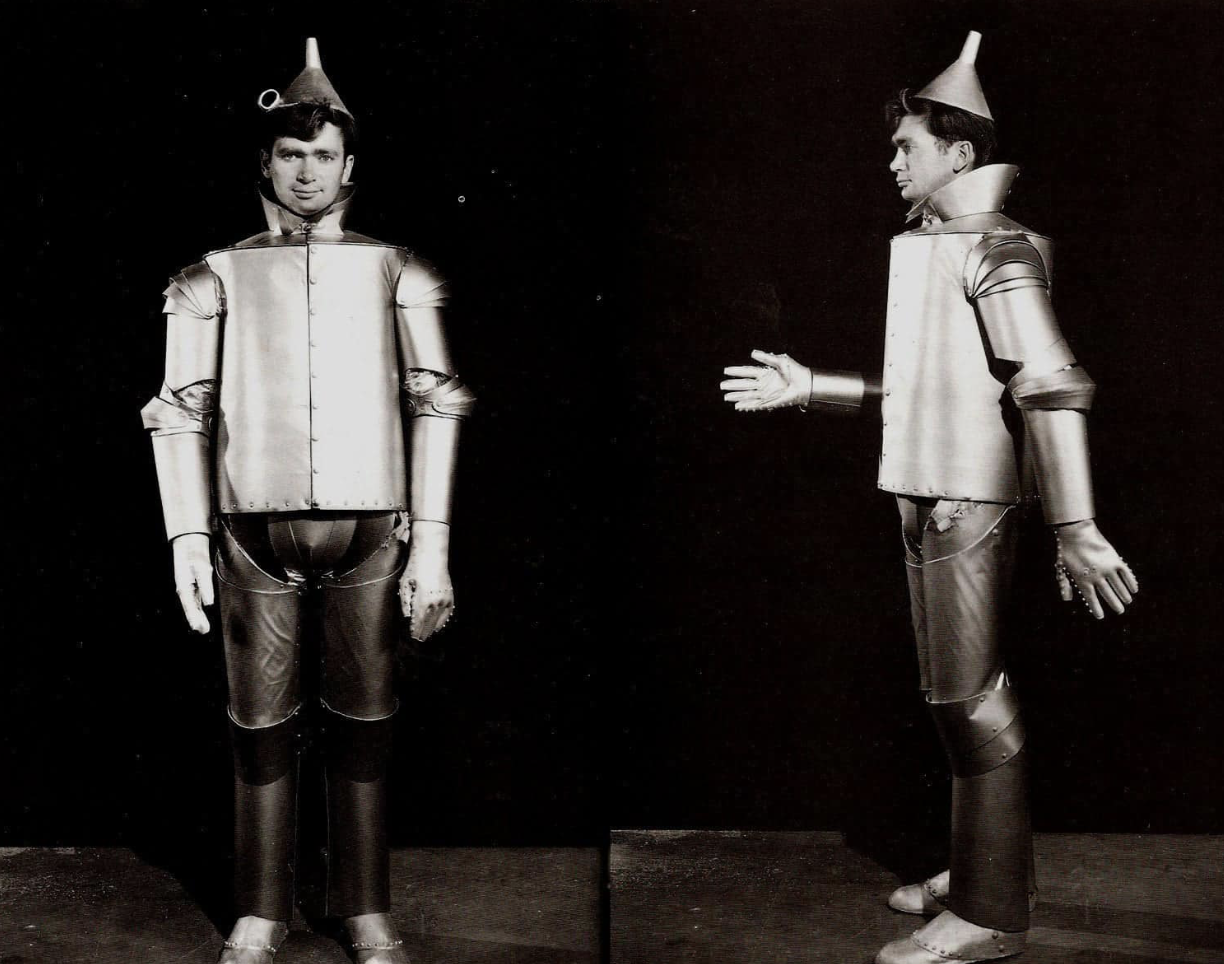
Before The Wizard of Oz became a beloved classic, it almost turned deadly.
The man who was supposed to play the Tin Man — actor Buddy Ebsen — didn’t just quit the role. He nearly died from the makeup that made him shine.
For ten brutal days, Ebsen breathed in a cloud of metallic poison. The studio had covered his skin with pure aluminum dust to make him sparkle on camera. It worked — until his lungs began to close up.
“I took a breath and nothing happened,” Ebsen later revealed. “It felt like my lungs were coated with glue. My breathing was excruciating. I wondered if I was dying.”
He was rushed to the hospital, gasping for air, and spent weeks in an oxygen tent. MGM quietly replaced him, scrubbed his name from the credits — and carried on filming as if nothing had happened.
At first, Ebsen wasn’t even supposed to play the Tin Man. He’d been cast as the Scarecrow, but after a behind-the-scenes switch, he found himself trapped in one of the most dangerous makeup jobs in movie history.
Makeup artists dusted his face and neck daily with powdered aluminum — the same metal used in paint and explosives. By the second week, he could barely stand. He collapsed after dinner one night, unable to breathe, and doctors soon discovered that the silver dust had coated his lungs.
“He was literally suffocating from the inside,” says Wizard of Oz historian John Fricke.
While Ebsen fought for his life in a hospital bed, MGM wasted no time recasting the role with Jack Haley.
But this time, the studio quietly changed the formula — mixing the aluminum into a paste so it couldn’t be inhaled.
Haley didn’t escape unharmed either. The paste caused a severe eye infection that took him off set for days. Still, the studio kept filming — business as usual.
The tragedy was never mentioned in publicity for the movie. Ebsen’s name vanished from the production, though his voice can still be heard singing in “We’re Off to See the Wizard.”
Ebsen would go on to fame decades later in The Beverly Hillbillies, but he never forgot the moment Hollywood’s magic almost killed him. “Back then, they said aluminum dust was harmless,” he wrote bitterly years later.
Now, with Wicked: For Good in theaters — and fans revisiting the darker side of Oz — Ebsen’s near-death story feels hauntingly relevant again.
Behind the yellow brick road’s glittering facade was a real-life horror: a man poisoned by his own costume — and a studio that kept rolling anyway.